











In the late 1800s a Bavarian-born brewer named Alois Bube made lager on Main Street in Mount Joy. Lager has to be kept cold for weeks while it ages, and there was no refrigeration, so he dug storage vaults about 43 feet under the brewery and hotel. Deep ground holds about the same temperature all year, and those stone cellars kept the beer cool through Lancaster County summers. The building still stands, and the old vaults are now The Catacombs restaurant.
The same ground is under every basement in town. Down where the footings sit, the soil does not freeze, and with Little Chiques Creek running through Mount Joy, the low blocks near it can carry a spring water table that sits above the basement slab. So the sump pump keeps working right through the winter. The part that freezes is everything above ground: the discharge line, the yard where it drains and the power lines that feed the pump.
Why Sump Pumps Fail in Winter
A summer storm is a test the pump usually passes. The water comes fast, the pump runs, the storm ends. Winter is harder in three quieter ways.
First, the discharge line can freeze where it comes out of the house. Water that sits in a low spot of the pipe turns to ice, the pump pushes against a blocked line, and the pit keeps filling. Second, ice storms and heavy snow take down power lines, and a pump with no power is a bucket. Third, a warm day after a big snow can melt a whole yard at once. The ground is still frozen near the surface, so that water runs toward the house instead of soaking in, and the pit fills faster than it does in most rainstorms.
None of that shows up in July. That is why November, before the first hard freeze, is the right time to look.
The Five-Minute Check
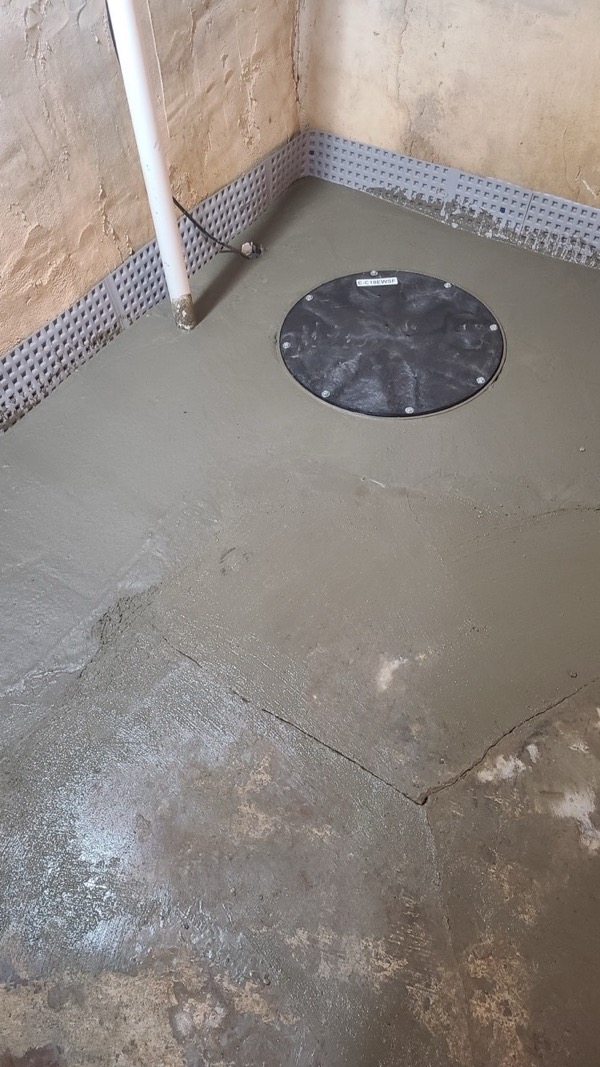
Pour a bucket of water into the pit. The float should lift, the pump should start on its own, empty the pit and shut off. If it hums but does not move water, hesitates, or runs on and on after the pit is empty, it needs attention before winter, not after.
Go outside and find where the discharge line ends. It should come out clear, run downhill away from the house and not end in a spot where snow piles up or where the water will run straight back to the foundation. A line that ends in a flat, low part of the yard is the one most likely to freeze.
Ask what happens if the power is out for eight hours. If the answer is nothing, because there is no battery backup, that is worth fixing on a dry day rather than during an ice storm.
Look at the lid. An open pit lets moisture and soil gas into the basement, including radon, which is common in parts of Lancaster County. A sealed lid also keeps leaves, toys and stored boxes out of the pump.
What We Do When Something Fails the Check
Most fixes are small. A pump that is near the end of its life gets replaced with a cast-iron one, which handles long run times and cold basements better than a light plastic pump. A battery backup gets added beside it, so the pit still empties when the power is out. An open pit gets a sealed lid.
Outside, we look at the end of the discharge line. Often the fix is just carrying it farther from the house and making sure it slopes the whole way, so no water sits in it to freeze. You can see what a full install includes on our sump pump page.
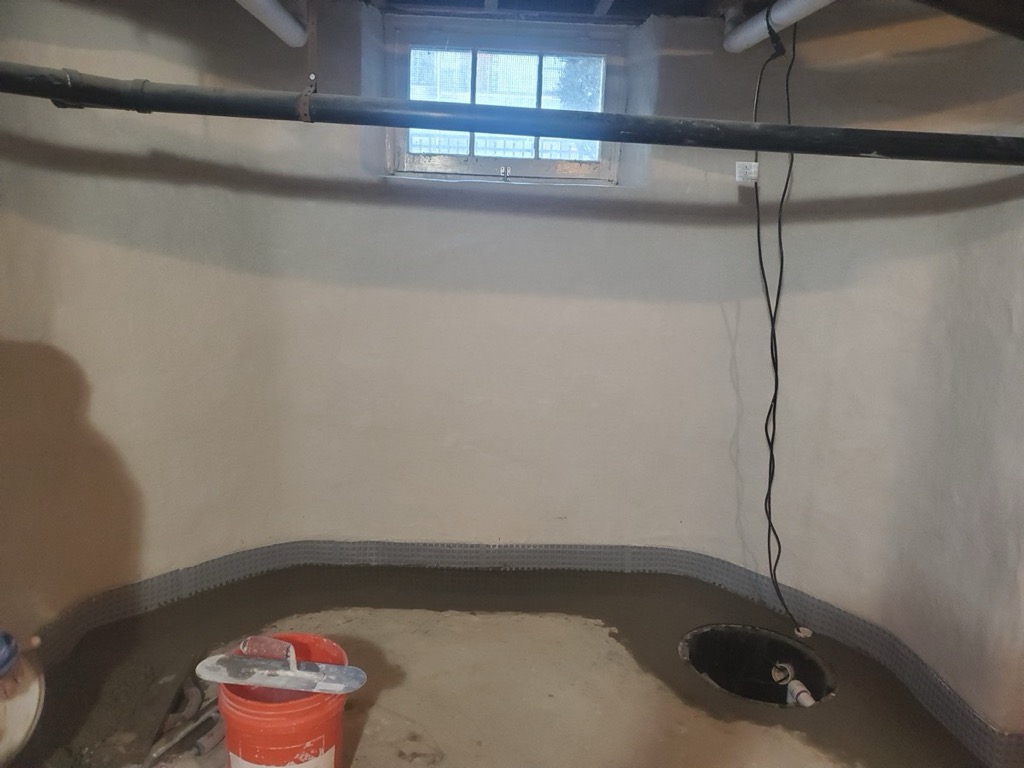
If the pit is filling often, the pump is only half the story. In the basement at the top of this post, the walls were coated and a drain runs along the bottom of every wall, so water that comes in at the floor line is carried to the basin instead of across the floor. That kind of perimeter drain is part of our basement waterproofing in Mount Joy work, and our cost guide lists the typical ranges.
Keep the Discharge Line From Freezing
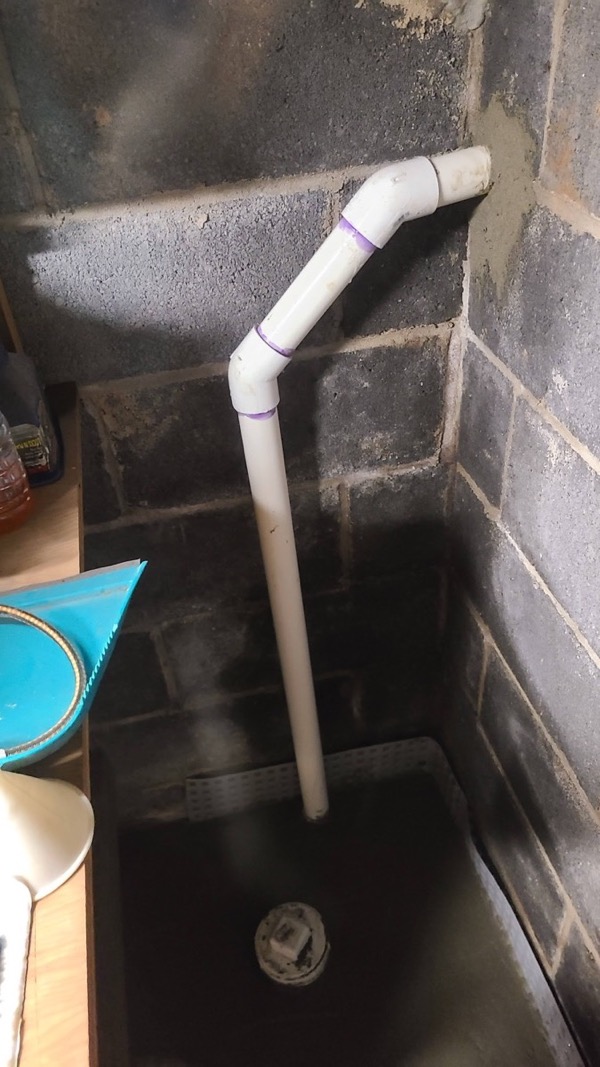
Inside the house, the pipe should climb from the pump and leave through the wall without dips. Outside, the line should keep falling until it ends. Any low spot holds water, and standing water is what freezes.
Keep the end of the line clear all winter. Do not let it get buried when you shovel the driveway or the walk, and do not run it into a spot where the plow piles snow. If the line has frozen before, tell us. There are simple ways to give the water somewhere to go if the end of the pipe is blocked by ice.
Downspouts matter too. A downspout that dumps right at the foundation sends roof water straight back to the pit, so the pump runs far more than it needs to. Carry them a few feet out from the house.
Before the First Hard Freeze
Do the bucket test, walk the discharge line, check the lid and think about backup power. If everything works, you are set for the winter. If anything looks off, or you are not sure what you are looking at, call us for a free inspection and a written estimate.
We serve Mount Joy, Elizabethtown, Marietta, Manheim and the rest of Lancaster County. You can read more about the ground under your house on our Mount Joy page, or see how river-town basements handle water from below in our Columbia sump pump post.
Frequently asked questions
How do I test my sump pump before winter in Mount Joy?
Pour a bucket of water into the pit. The pump should start on its own, empty the pit and shut off. Then go outside and make sure the discharge line ends clear, slopes away from the house and is not buried in snow.
Why do sump pumps fail more often in winter?
The discharge line can freeze where it leaves the house, ice storms knock out power, and a warm day after heavy snow can send a lot of meltwater toward the foundation at once. A frozen line, no backup power or a worn pump is what turns that into a wet basement.
Do I need a battery backup sump pump?
If your pit fills during storms or snowmelt, yes. A battery backup keeps the pit emptying when the power is out, which is often exactly when the water is coming in. We install it beside the main pump.
Keep reading