











In late June 1972, the remnants of Hurricane Agnes stalled over Pennsylvania and dropped nearly 15 inches of rain on Lancaster County in a matter of days. The Susquehanna River gauge at Marietta, just upriver from Columbia, crested at 64.54 feet on June 23. Riverfront blocks went under, and families all along the river spent the rest of that summer hauling mud out of their basements.
Agnes was a once-in-a-generation flood, and most Columbia homeowners will never see anything like it. But the river still shapes life in town in a quieter way. It sets the water table under your house, and when that water table rises in a wet spring or after a long soaking rain, it does not come in through the window wells. It comes up through the floor.
Why Columbia Basements Take Water From Below
Columbia has some of the oldest housing stock in Lancaster County. Brick rowhomes and stone-foundation houses climb the hill from the riverfront, many of them built in the 1800s, long before anyone poured a vapor barrier or laid drain tile under a basement floor. Those foundations were built to hold up a house. Keeping groundwater out was never part of the plan.
In a river town, the ground under the slab is often closer to saturated than homeowners realize. When the Susquehanna runs high, the water table in the low-lying parts of Columbia rises with it. That groundwater pushes upward against the floor and sideways against the walls. It finds the joint where the wall meets the floor, the cracks in an old slab, and the gaps in mortar between foundation stones.
That is the key difference between a Columbia wet basement and a leak caused by a bad gutter. Fixing the downspouts helps, but it cannot stop water that is rising from underneath. You need a way to collect that water and get it out of the house before it reaches the floor. That is the job of a sump pump.
Signs Your Columbia Home Needs a Sump Pump
Some basements announce the problem with an inch of standing water. Most give quieter warnings first. Watch for damp patches in the middle of the floor that show up a day or two after heavy rain, water seeping along the base of the walls, white chalky efflorescence on stone or block, or a musty smell that never quite clears out.
If you already have a sump pump, the warning signs look different. A pump that runs constantly, cycles on and off every few seconds, makes grinding noises, or sits in a pit that stays full is telling you something is wrong. Many pumps in older Columbia homes are well past their working life, and a pump that quits during a storm is worse than no pump at all, because you were counting on it.
Fall is the right time to check. Once the leaves are down and the ground starts to freeze and thaw, a pump that struggled through the summer will not get any better. It is far easier to replace a tired pump in October than to call for help with water on the floor in March.
How Basement Gurus Installs a Sump Pump
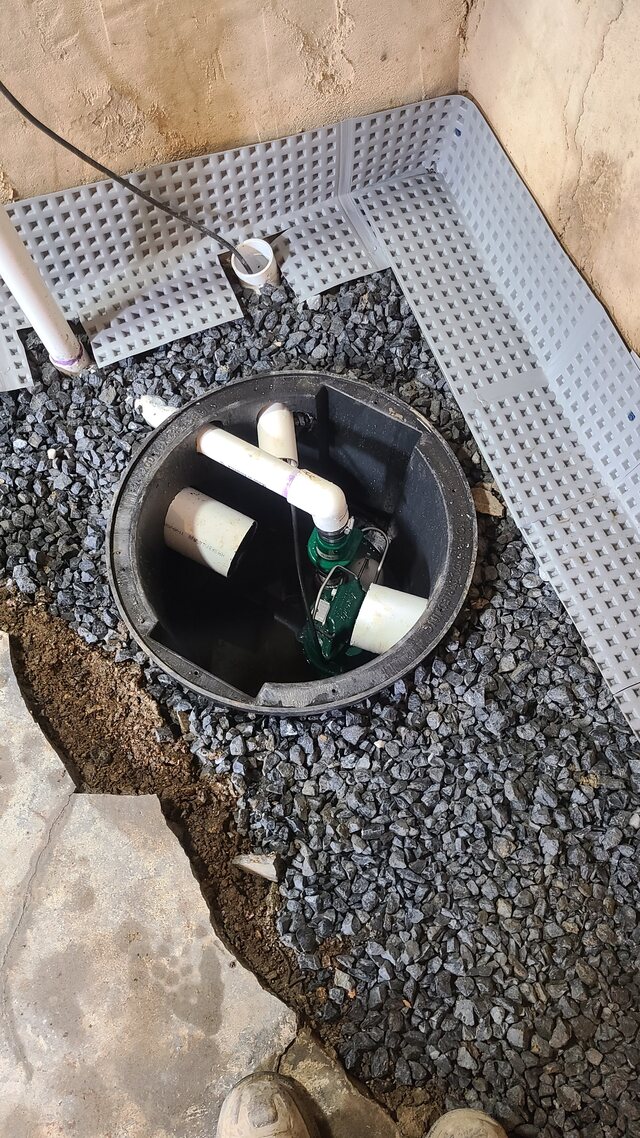
A sump pump is only as good as the system around it. We start by finding where the water is coming from and the lowest point of the basement, because water will always collect there first. Then we cut the floor and dig a pit deep enough to sit below the slab, where groundwater naturally gathers.
The pit gets a sturdy basin set in a bed of clean, washed stone, which you can see in the photo above. The stone lets groundwater flow freely into the basin while keeping soil out. In most Columbia basements we connect the basin to a perimeter drain that runs under the floor along the walls, so water that seeps in anywhere around the foundation is carried straight to the pump. A dimpled membrane on the lower wall directs any wall seepage down into that drain instead of across your floor.
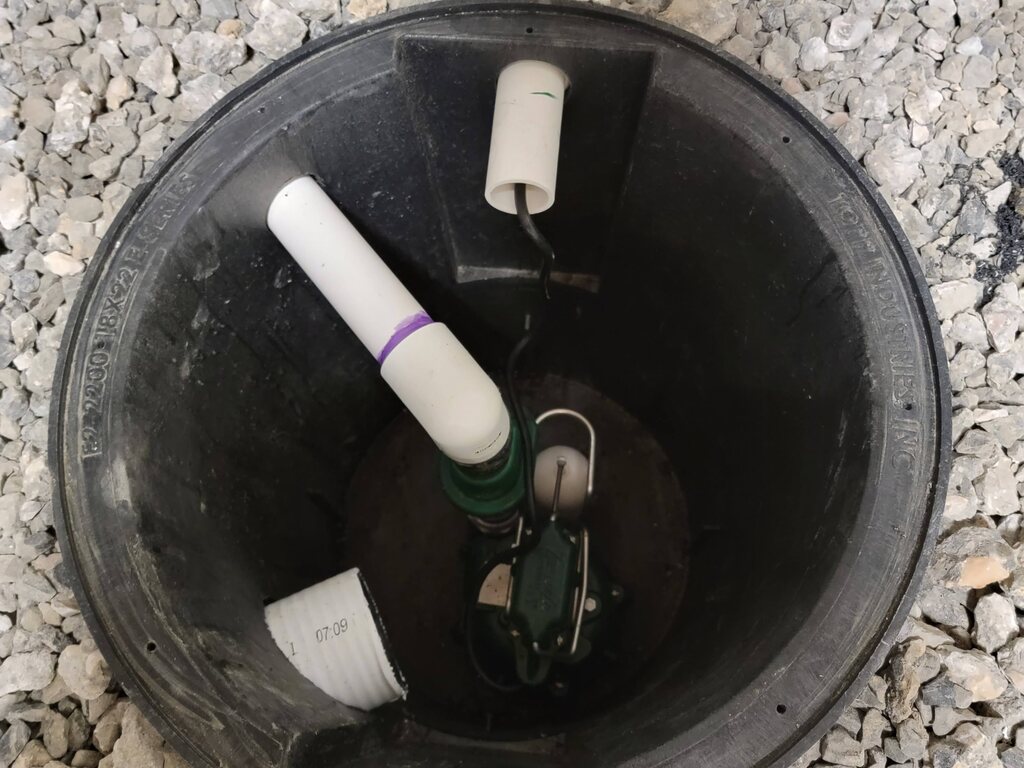
Inside the basin goes a cast-iron submersible pump with a float switch that turns it on as the water rises. The discharge line runs out of the house with a check valve so water does not fall back into the pit, and we route the outlet well away from the foundation so the same water does not soak back toward your walls. Many homeowners add a battery backup so the pump keeps running if a storm knocks out the power, which is exactly when you need it most.
You can read more about pump options on our sump pump systems page. When a pump is part of a bigger plan, our approach to basement waterproofing in Columbia combines the drain, the pump, and wall protection so the whole basement stays dry.
Old Foundations Need More Than a Pump
In Columbia, the mortar is often as much of the problem as the water. Stone and early brick foundations lose mortar over decades, and every open joint is a path for moisture. A sump pump removes the water that gets in, while repointing and sealing reduce how much gets in to begin with. On older homes we look at both, because each one makes the other work better.
The same goes for the outside of the house. Extending downspouts and correcting grading that slopes toward the foundation takes surface water out of the equation, which leaves the pump to handle what only a pump can handle: the groundwater rising from below.
Keep Your Columbia Basement Dry This Winter
The river has shaped Columbia since the ferry days, and it is not going anywhere. A properly installed sump pump is how homes in town live with it comfortably. If your basement takes water after heavy rain, if your current pump is getting old, or if you just want to know where you stand before winter, call Basement Gurus at (800) 834-6584. We will look at your basement, show you where the water is coming from, and give you a straight answer about what it takes to keep it dry.
Frequently asked questions
Do I need a sump pump if my Columbia basement only gets damp, not flooded?
Often, yes. Dampness in the middle of the floor or along the base of the walls after rain usually means groundwater is pushing up from below, which is common in Columbia because the Susquehanna keeps the water table high. A sump pump with a perimeter drain removes that water before it soaks into the slab and feeds mold.
How long does a sump pump last?
A quality cast-iron sump pump typically lasts around seven to ten years, depending on how often it runs. Pumps in Columbia's low-lying blocks can run much more often than average, so they may wear out sooner. If your pump is older, noisy, or cycling constantly, have it checked before the wet season.
Should I add a battery backup to my sump pump?
For most Columbia homes we recommend it. The heaviest storms are also the ones most likely to knock out power, and a primary pump cannot run without electricity. A battery backup takes over automatically and keeps water out of the basement until the power comes back.