











In 1732 a German baker and religious teacher named Conrad Beissel settled along Cocalico Creek, and followers soon joined him. By the middle of that century about eighty celibate brothers and sisters lived at the Ephrata Cloister, sleeping on wooden benches 15 inches wide with wooden blocks for pillows. Roughly 200 married couples and families lived on farms nearby. The last celibate member died in 1813, and Pennsylvania took over the site in 1941. You can still walk through it today.
The creek that drew Beissel here is still part of daily life in Ephrata, and so is the ground around it. The red shale clay in the Cocalico basin holds water for days after a storm and keeps pressing it against foundation walls. A basement can stay damp long after the yard looks dry. Then November comes, the house closes up, and many families notice a smell they did not notice all summer.
Why You Notice It Now
All summer, open windows bring fresh air through the house. Once they close, that air stops moving through, and whatever is in the basement stays in the house. When the heat runs, warm air rises through the floors and pulls air up from below to replace it. If the basement smells musty, the upstairs soon does too.
So the smell is often a new clue about an old problem. A musty smell means something down there is staying damp: block, wood, drywall, carpet or stored cardboard. Mold grows on those materials when they stay wet, and the first place to look is usually low on the wall, behind shelves and boxes, and under the stairs.
A cheap humidity meter is a good first step. The EPA says to keep indoor humidity below 60 percent, ideally between 30 and 50 percent. If your basement sits well above that even with the heat on, the moisture is coming from somewhere.
What You Can Clean Yourself, and When to Call
Not every spot of mold needs a contractor. The EPA's guidance is that an area under about 10 square feet, roughly 3 feet by 3 feet, is usually something a homeowner can handle. On a hard surface, that means scrubbing it with detergent and water and drying it completely. Wear gloves, goggles and an N-95 mask while you do it.
Two common fixes do not solve the problem. Paint over mold is likely to peel, and the EPA says to clean and dry the surface before painting. The EPA also does not recommend bleach as a routine part of mold cleanup. If you do use it, never mix it with anything that contains ammonia, because the fumes are toxic.
Call for help when the area is larger than that, when mold keeps returning after you clean it, or when it is inside a wall or in insulation. The same goes if the mold came with a lot of water damage. If someone in the house has asthma, allergies or a weakened immune system, talk with their doctor before anyone starts disturbing it.
What Mold Remediation Looks Like
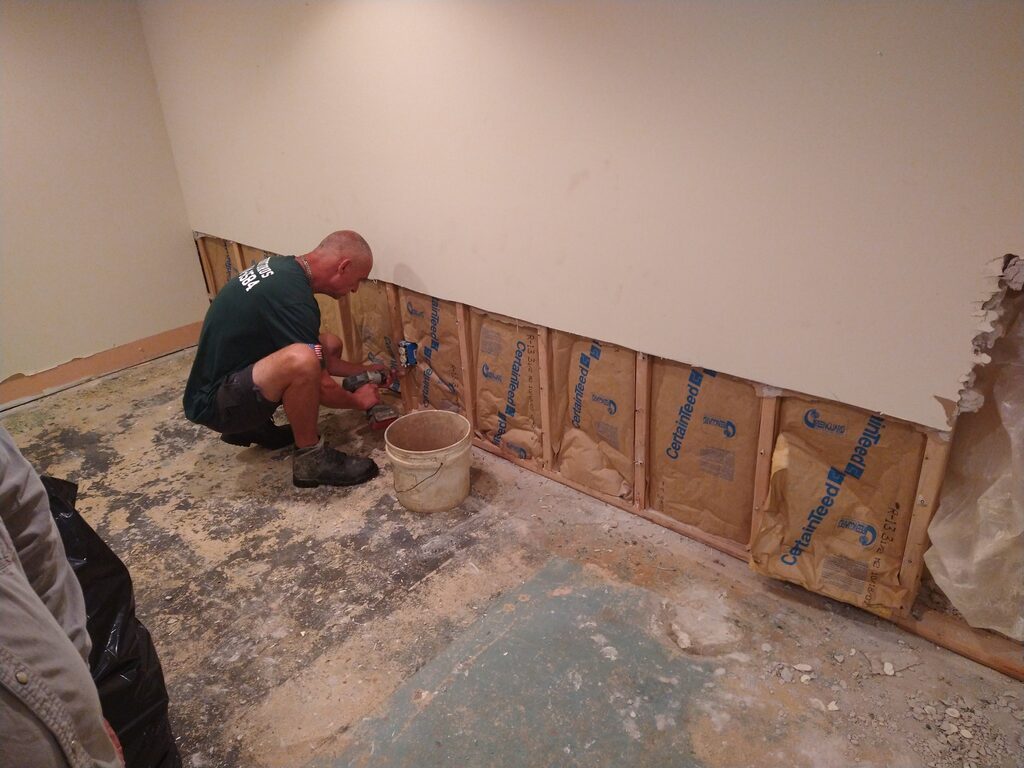
A job starts with an inspection and moisture readings, because we need to know how far the damp goes before we open anything. The photo at the top shows why that matters: once the lower part of a wall comes off, you can see what the framing and insulation have been sitting in.
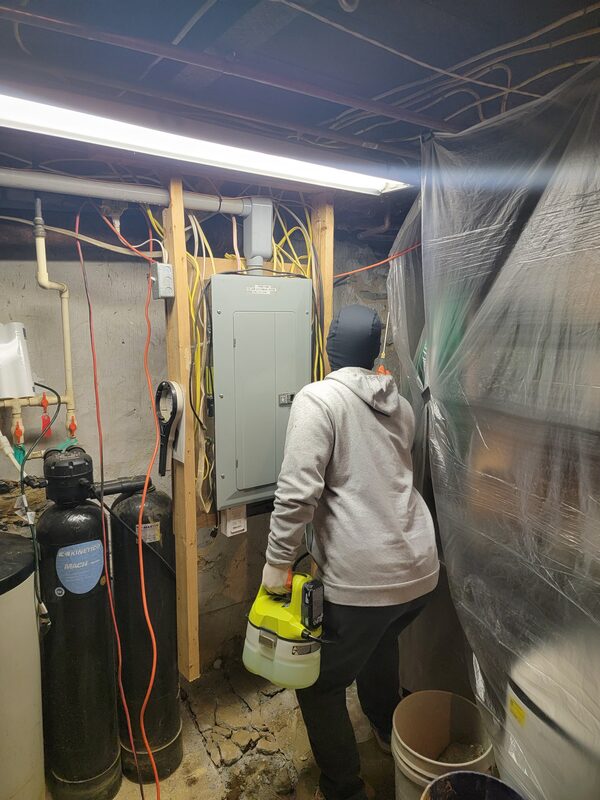
Next we close off the work area with plastic and use negative air, so spores stay out of the rest of the house. HEPA filtration runs while we work. Drywall, insulation or carpet that is too far gone gets cut out and replaced, and the surfaces that stay are cleaned and treated.
That is the scope of our mold remediation work, and it ends with a check of the air and the moisture levels. What it costs depends mostly on the size of the affected area, and our cost guide lists the typical ranges. We give you a written estimate after we see the space.
In Ephrata, the Water Is Usually the Real Problem
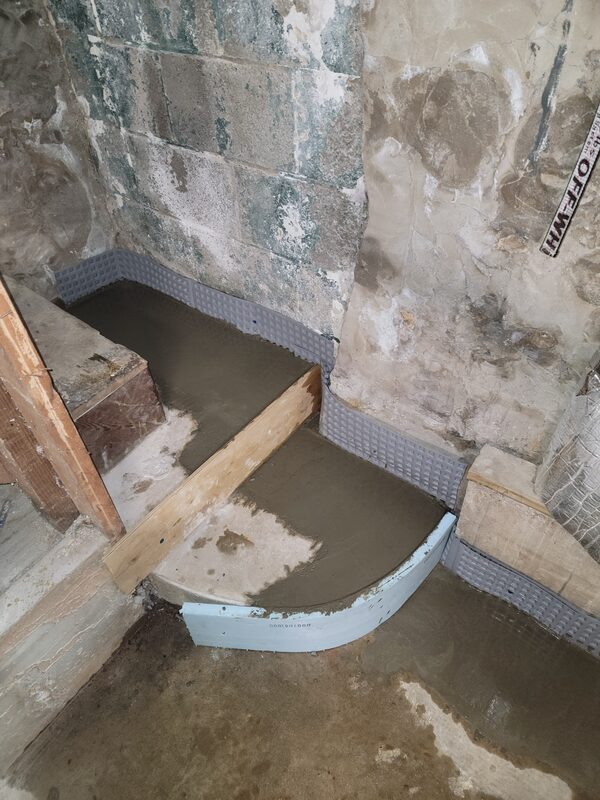
The EPA puts it simply: if you clean up the mold and do not fix the water problem, the mold will most likely come back. Around Ephrata, that water often comes through the cove joint, the seam where the floor meets the wall. Look for a damp line along the bottom of the wall a few days after a storm, white mineral lines on the block, or rust at the base of metal posts.
Red shale clay is slow to let go of water, so a wall can stay wet long enough to feed mold through a whole season. The usual fix is a drain along the footing that runs to a sealed sump basin, with downspouts carried away from the house. You can read how that works on our basement waterproofing in Ephrata page.
Sometimes the answer is smaller: a downspout that dumps at the foundation, a dryer vent that has come loose, a slow pipe leak, or air that needs a dehumidifier. We check for the simple causes first, and we will tell you if that is all you need.
What to Do This Week
Move boxes and shelves a few inches off the outside walls so air can get behind them, and get cardboard off the floor. Check the humidity. Walk the outside of the house during the next rain and see where the downspouts go. If you have a flood or a leak, dry everything within 24 to 48 hours, because the EPA says that in most cases mold will not grow if wet materials are dried in that time.
If the smell stays, or you find more than a small patch, call us for a free look at your basement. You can also read about the ground under your house on our Ephrata page.
Frequently asked questions
Why does my Ephrata house smell musty once the heat comes on?
Closed windows keep basement air in the house, and when the heat runs, warm air rising through the floors pulls air up from below. If something in the basement is staying damp, you start to smell it upstairs. The smell points to moisture, so look for damp block, wood, cardboard or carpet first.
Does painting over basement mold or spraying it with bleach fix it?
No. The EPA says paint over moldy surfaces is likely to peel, and it does not recommend bleach as a routine part of mold cleanup. The surface has to be cleaned and dried, and the moisture behind it has to be fixed, or the mold will most likely come back.
Will mold come back after remediation if my Ephrata basement still gets damp?
Most likely, yes. Red shale clay around Ephrata can hold water against a foundation for days after a storm, and a wall that stays damp can grow mold again. That is why we find the source of the water and fix it as part of the job.