











A Farmer, a Lawyer, and a Very Wet Field
Henry Flagg French was not a plumber. Born in 1813 in Chester, New Hampshire, he grew up to become a lawyer, a judge, and eventually an assistant secretary of the U.S. Treasury. He was also the father of Daniel Chester French, the sculptor who later carved the seated Abraham Lincoln for the Lincoln Memorial. But before any of that fame, Henry French was a farmer in Concord, Massachusetts, wrestling with the same problem that frustrates homeowners today. His land held water.
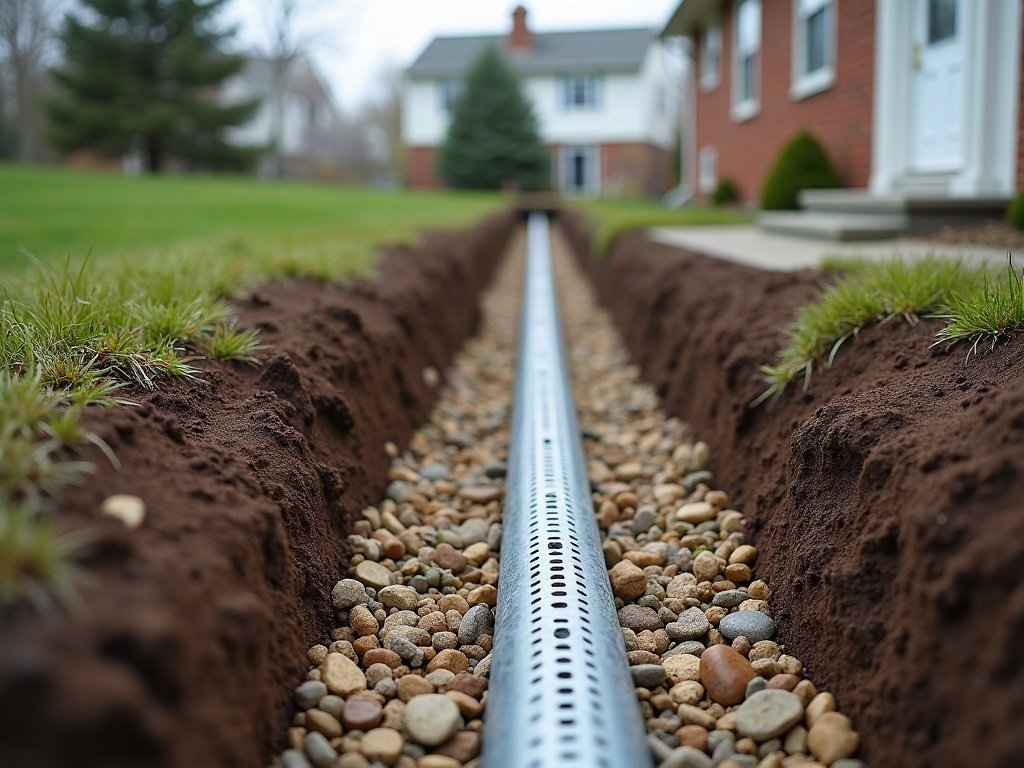
Heavy clay soil trapped moisture around his crops. Fields turned to muck. So French studied drainage methods from England, ran his own experiments, and in 1859 published a book called "Farm Drainage." In it he described a method for pulling subsurface water away from where you did not want it: a trench, sloped carefully, filled with stone or gravel, that gave water an easy path to travel. Later versions added a perforated pipe at the bottom to move water even faster.
French did not invent the concept of buried drains. Farmers had used stone-filled trenches for centuries. What he did was explain it clearly, test it practically, and put it in a book that spread across America. The name stuck. Today we call it a French drain, and the same physics that dried out a Concord hayfield now keeps water out of finished basements in Gap, Pennsylvania.
Why Gap, PA Homes Fight the Same Battle French Did
Gap sits in eastern Lancaster County, where the rolling farmland and older housing stock create real drainage challenges. Much of the soil here holds a good deal of clay, which does exactly what French complained about in 1859. It drains slowly and holds water against foundations after a storm.
When rain saturates the ground around your home, that water needs somewhere to go. If your grading pushes it toward the house, or your soil cannot absorb it fast enough, hydrostatic pressure builds against your foundation walls and footing. Water finds the weak points. It seeps through cracks, wicks through porous concrete block, and pools where the wall meets the floor. That is how a dry basement becomes a wet basement, sometimes overnight during a heavy Lancaster County thunderstorm.
Older homes around Gap often have foundations built before modern waterproofing was standard. Newer homes are not immune either, especially when landscaping settles or downspouts dump water too close to the wall. The pattern is familiar to us. A musty smell, a damp corner, efflorescence staining on the block, or an inch of standing water after a wet week. The good news is that Henry French already figured out the answer.
How a French Drain Actually Works
The idea is simple and it has not changed much in over 160 years. You create a path of least resistance for water. Instead of forcing water to press against your foundation, you give it an easier route to travel away.
A properly built French drain uses a perforated pipe set in a bed of clean, washed gravel, wrapped in filter fabric so soil and silt do not clog it over time. The trench is sloped so gravity carries the collected water toward a discharge point, whether that is a sump pit, a storm outlet, or daylight lower on the property. Water always follows the path with the least resistance, and a well-designed drain makes that path lead away from your home.
There are two main types we install. An exterior French drain sits outside along the foundation footing and intercepts water before it reaches the wall. An interior French drain, often called a drain tile system, runs beneath the basement floor along the perimeter and channels water to a sump pump. Which one fits your home depends on your foundation, your yard, and how the water is getting in. That is a judgment call, and it is where experience matters.
How Basement Gurus Installs French Drains in Gap
We do not guess. Every project starts with figuring out where the water comes from and where it wants to go. We look at grading, downspouts, soil conditions, and the interior signs of moisture before we ever break ground. A drain installed in the wrong spot, or without proper slope, is just an expensive trench.
For interior systems, we cut the perimeter of the basement floor, excavate to the footing, and set perforated pipe in clean stone. The pipe ties into a sump pit with a reliable pump, and we finish the concrete back cleanly. For exterior work, we excavate along the foundation, address the footing, install the drain and gravel, and often add wall protection while the trench is open. In both cases we use filter fabric to keep the system running for the long haul.
We treat French drains as one part of a complete plan. Fixing the drain without fixing the downspouts or the grading solves only half the problem. That is why our drainage solutions look at the whole water story around your home. When you need a full moisture strategy, our approach to basement waterproofing in Gap combines drainage, sump systems, and wall protection so the fix actually lasts.
Henry French wanted a dry field that could grow a good crop. Homeowners in Gap want a dry basement they can use for storage, a workshop, or finished living space. The tool is the same. The care in how it is built is what makes the difference.
When to Call About a Wet Basement
Do not wait for standing water. Early signs are easier and cheaper to address. If you notice damp spots after rain, a musty odor, white mineral staining on block walls, peeling paint, or a persistent trickle where the floor meets the wall, those are your foundation telling you water is finding a way in. A French drain, sized and placed correctly, is often the core of the solution.
Basement Gurus works throughout Gap and eastern Lancaster County. If your basement takes on water, call us at 800-834-6584 and we will walk your property, find the source, and give you a straight answer about what it takes to keep it dry.
Frequently asked questions
Does a French drain go inside or outside my Gap home?
It depends on your foundation and how water is entering. Exterior French drains intercept water before it reaches the wall, while interior drain tile systems collect water under the basement floor and send it to a sump pump. We evaluate your home in Gap and recommend the type that fits your situation.
How long does a French drain last?
A properly installed system with clean washed gravel, a perforated pipe, and filter fabric can last for decades. The key is correct slope and keeping silt out of the pipe. Poorly built drains clog and fail, which is why installation quality matters more than the parts themselves.
Can a French drain alone stop my wet basement?
Often it is the main fix, but not always the only one. If your downspouts, grading, or foundation cracks are also letting water in, those need attention too. We look at the full picture so the drain is not fighting problems it was never meant to solve on its own.
Keep reading