











On any given Sunday morning along Route 272, thousands of people roam the aisles at Shupp's Grove and Renninger's, hunting for the kind of solid, well-built pieces they do not make anymore. Adamstown earned its nickname as the Antiques Capital of the USA for good reason. People here appreciate things that were made to last.
The funny thing is, many of the houses in and around Adamstown are antiques in their own right. Stone foundations, brick rowhomes near the borough center, and farmhouses out toward the Cocalico Creek have stood for a century or more. They were built well. But even the best old foundation was never designed to fight the exact conditions we deal with in this part of Lancaster County, and that is where trouble starts.
Why Adamstown Foundations Take a Beating
The soil here is the real story. Lancaster County sits on heavy clay, and clay does something specific when it gets wet. It swells. When it dries out, it shrinks and pulls back. That constant expanding and contracting puts steady pressure against your foundation walls, season after season.
Now add the rain. When we get a heavy summer storm or a stretch of soaked spring days, water does not drain quickly through clay. It sits. It builds up in the soil right against your foundation, and that saturated ground pushes inward with a force called hydrostatic pressure. A wall that held fine for eighty years can start to crack, lean, or bow once that pressure has been working on it long enough.
Older homes feel this more than newer ones. A stone or block foundation from the early 1900s does not have the same reinforcement a modern poured wall has. The mortar joints get soft, the wall flexes, and small problems grow into structural ones.
The Warning Signs Homeowners Miss
Most foundation problems announce themselves quietly before they get loud. In Adamstown homes, here are the things worth watching for.
Stair-step cracks in a block or brick wall, running diagonally through the mortar joints, usually mean the wall is under pressure or the footing has moved. Horizontal cracks are more serious, and they often point to soil pushing the wall inward. If you see a wall that looks like it is leaning or bulging toward the middle, that is bowing, and it does not fix itself.
Inside the house, look for doors and windows that suddenly stick, floors that feel uneven, or new gaps where the wall meets the ceiling. In the basement, water on the floor after a storm is a signal too. Water and structural cracking often travel together, because the same pressure that moves your wall is also finding its way in.
If you are noticing any of these, it is worth a professional look. The team at Basement Gurus handles foundation repair in Adamstown and can tell you whether you are looking at a cosmetic crack or something that needs real attention.
How Basement Gurus Approaches the Repair
There is no single fix that works on every house, so the work always starts with a real inspection. We look at the wall, the soil conditions, the grading around the home, and how water is moving on your property. An accurate diagnosis matters, because repairing the symptom without addressing the cause just buys you a little time.
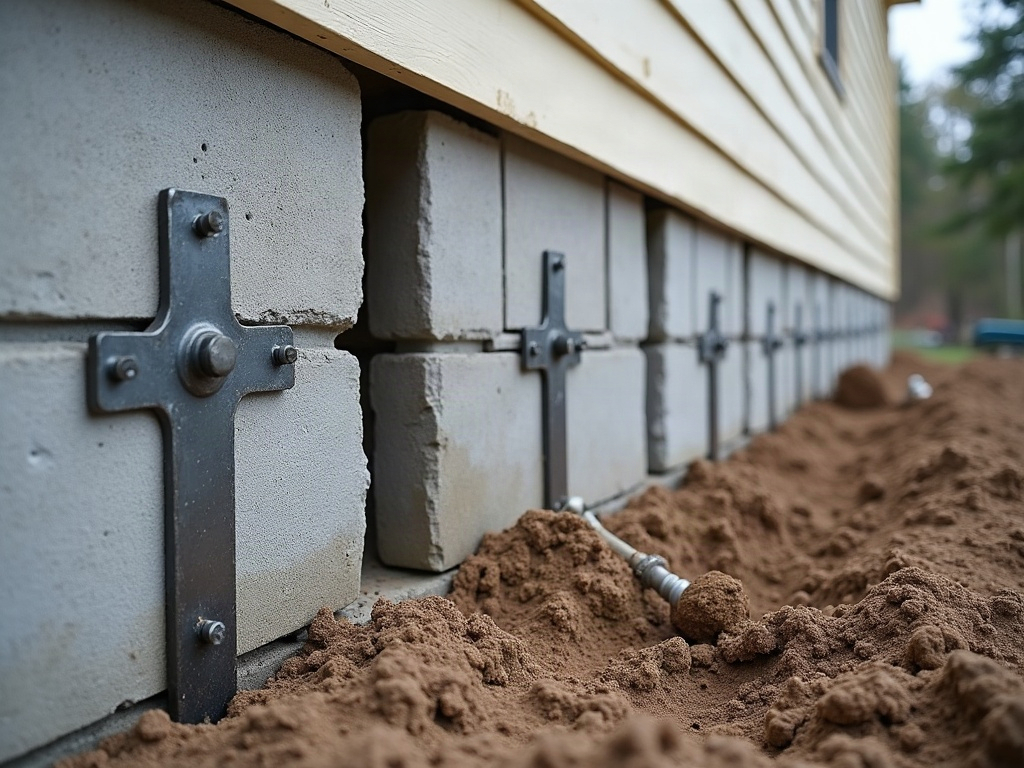
For walls that are cracked but stable, we can seal and reinforce them to stop movement and keep water out. For walls that are bowing under soil pressure, we use methods built for that job. Carbon fiber straps work well on walls with mild to moderate bowing, anchoring the wall and holding it in place without a full rebuild. For more serious cases, wall anchors or steel bracing distribute the load and, over time, can help pull a wall back toward its original position.
When a foundation has settled because the soil beneath the footing gave way, we look at underpinning with piers that reach down to stable ground. This lifts and supports the structure from below. Every one of these methods is chosen based on what your specific wall is doing, not a one-size answer.
Repair and Water Control Go Together
Here is something we tell every homeowner in the area. Fixing the wall is only half the job if water keeps building up against it. Since our clay soil holds moisture so stubbornly, managing that water is what makes a repair last.
That often means pairing structural work with Basement Waterproofing, including interior drainage, sump systems, and better exterior grading to move water away from the house. When you relieve the hydrostatic pressure, you take the load off the wall you just repaired. The two go hand in hand, and doing them together protects your investment.
Protecting an Older Home for the Long Run
The homes in Adamstown were built to last, and with the right care they will. A foundation that has started to move is not a reason to panic, but it is a reason to act before a small crack becomes a major repair. Catching it early almost always means a simpler, less expensive fix.
If you have seen any of the signs above, or you just want peace of mind before the next big storm, our crew knows these local homes and these local soils. Call Basement Gurus at (800) 834-6584 and we will take a look, explain what we find in plain language, and give you honest options.
FAQ
Frequently asked questions
How do I know if my Adamstown foundation crack is serious?
Vertical hairline cracks are often cosmetic, but horizontal cracks, stair-step cracks through mortar joints, and any wall that appears to be bowing or leaning usually signal structural pressure. If cracks are widening, letting in water, or paired with sticking doors, have it inspected soon.
Why do foundation problems seem worse after heavy rain here?
Lancaster County's clay soil does not drain quickly, so water builds up against your foundation and creates hydrostatic pressure that pushes on the walls. That is why cracking, bowing, and basement water often appear together after a storm, and why water control is part of a lasting repair.
Can a bowing basement wall be fixed without full replacement?
In many cases, yes. Walls with mild to moderate bowing can be stabilized with carbon fiber straps, and more serious bowing can be addressed with wall anchors or steel bracing. Full rebuilds are only needed in severe situations. We recommend the method after inspecting your specific wall.