











In 1761 a Lancaster blacksmith named John Miller laid out a village in five-acre lots along the road south of the city. It was called Millersburg, then Millerstown, and by the 1850s Millersville. Around the same time James Wickersham opened a teacher training school here, which became the first state normal school in Pennsylvania and is now Millersville University. Miller's own house from 1763 is still standing on campus.
Because the town is so old, its houses come in layers: stone and brick homes near the old village center, additions put on decades later, and a lot of mid-century houses built over a short crawl space instead of a full basement. Many of those are now rentals near the university, and plenty of them share the same complaint each fall. The floors get cold, the house smells musty, and nobody wants to crawl under there to see why.
What a Vented Crawl Space Does in a Lancaster County Winter
For a long time the standard advice was to vent crawl spaces to the outside, on the idea that outside air would dry them out. In our climate it mostly does the opposite. In winter the vents let freezing air flow right under your floors and around your water lines. The floor above stays cold no matter how high you set the heat, and pipes near the vents are the first ones to freeze on a January night.
Air also moves up through a house. Warm air leaves through the upper floors and the attic, and it is replaced by air pulled in from below. A good share of that air comes up from the crawl space, through gaps around pipes, wires and ductwork. Whatever is down there, cold air, damp air or the smell of wet soil, ends up in your living room.
Why the Summer Is Actually the Worse Season
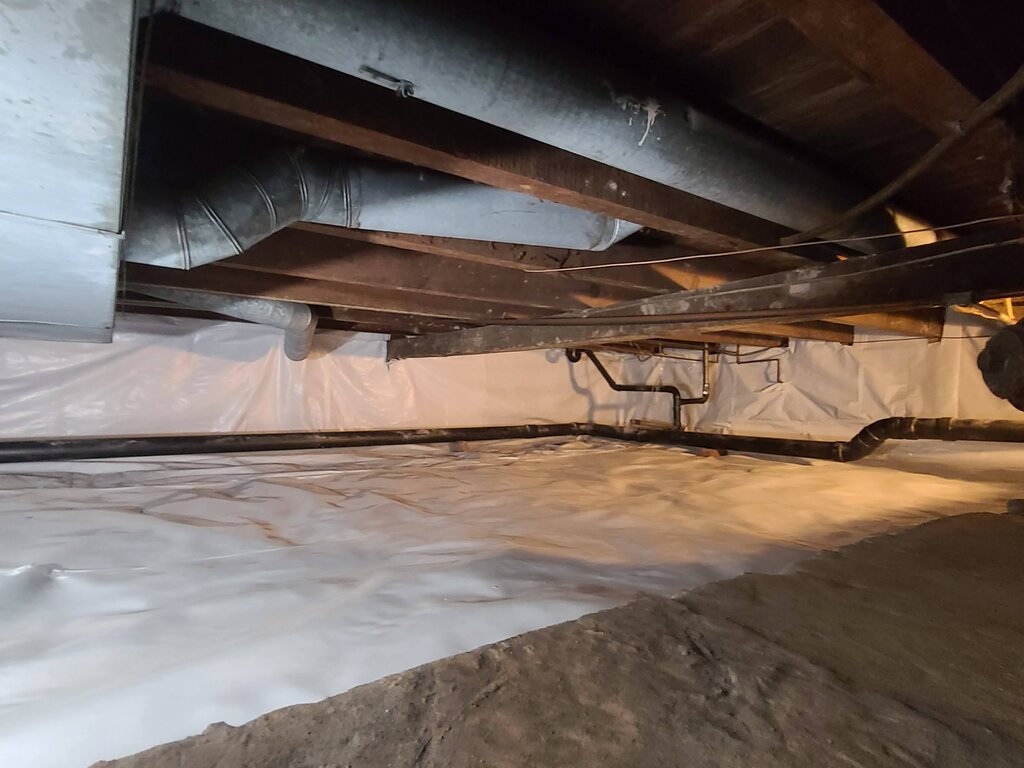
Cold floors are what people notice in November. The damage usually happens in July. A humid summer day in Lancaster County brings warm, wet air in through the vents. Under the house the ground and the foundation stay cool, so that air cools down and the moisture in it condenses on the joists, the ductwork and the cold water pipes. That is why you see a crawl space with dry dirt but wet, dripping ductwork.
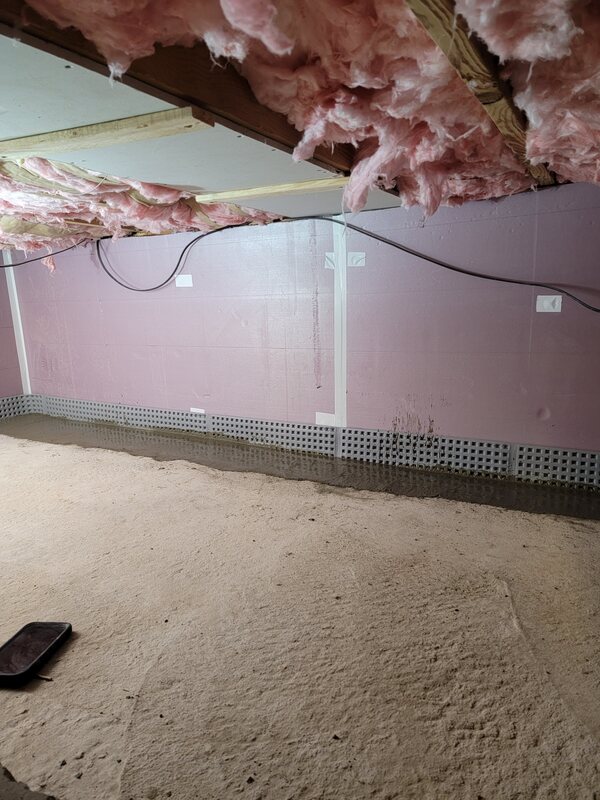
Add the moisture coming up out of a bare dirt floor every day, and the wood under the house sits damp for months at a time. Wood that stays wet grows mold and starts to rot. Insulation between the joists gets heavy and sags down. If you have looked under there and seen fuzzy white or dark spots on the joists, or batts of insulation hanging loose, that is the cause.
Millersville is close to the Conestoga River, and a lot of lots near town sit on limestone, where the ground can stay wet after a storm. That is one reason crawl space and mold work comes up more here than in most of the county.
What Encapsulation Actually Is
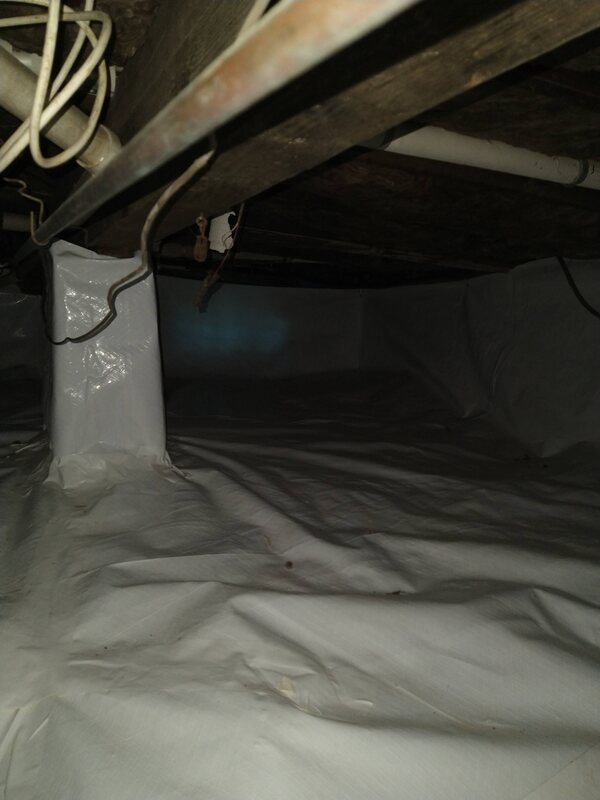
Encapsulation turns the crawl space from a damp space open to the outdoors into a sealed part of the house. In practice that means four things done together:
A heavy reinforced vapor barrier over the whole ground, with the seams overlapped and taped. The same liner runs up the foundation walls and gets fastened and sealed near the top, and it is wrapped and taped around every pier. The outside vents and any other openings get sealed shut. And a crawl space dehumidifier keeps the humidity down, so the wood stays dry all year instead of drying out only when the weather happens to cooperate.
If water actually comes into the crawl space during storms, that has to be handled first, usually with a drain under the liner and a sump pump. A liner on top of standing water only hides the problem. The same goes for wood that has already rotted: rotted joists or a soft sill plate get fixed before the space is sealed up, which is what our crawl space repair work is for.
Why a Sheet of Plastic on the Dirt Is Not the Same Thing
A lot of Millersville crawl spaces already have some plastic on the ground. Usually it is thin, torn in a few places, and stops short of the walls. It helps a little. But moisture still comes up around the edges and through the block walls, and the vents still bring in humid air all summer. That is why a crawl space can have a vapor barrier and still smell musty.
Closing the vents in the fall and opening them in spring is another common half-fix. It helps a bit in winter, but if the ground is still bare and nothing removes the moisture, the space just stays damp with the vents closed.
Sometimes a floor liner by itself is enough, for example under a small addition where the crawl space is already dry. We will tell you if that is your situation. The full breakdown of what each option costs is in our cost guide.
What Changes After the Crawl Space Is Sealed
The first thing most people notice is the smell going away. Then the floors. With the vents closed and the space sealed, the crawl space stays much closer to the temperature of the house, so the floor above is not sitting on top of winter air anymore. Pipes and ductwork run through a protected space, and the furnace is not working against cold air coming up from underneath.
It also makes the crawl space usable. A clean, dry, lit space is somewhere a plumber or HVAC tech can actually work, and somewhere you can store things. For landlords near the university, it means fewer calls about smells, frozen lines and mold in the rooms above.
Get It Done Before the First Hard Freeze
Fall is the best time to look under the house. It is still comfortable to work in the crawl space, and the summer's moisture damage is easy to see before winter sets in. If your Millersville home has cold floors, a musty smell, sagging insulation or a crawl space you have avoided for years, call Basement Gurus at (800) 834-6584. We will go under the house, show you photos of what we find, and give you a written estimate. You can read more about crawl space encapsulation, about basement waterproofing in Millersville, or about the ground conditions on our Millersville page.
Frequently asked questions
Should I close my crawl space vents in winter?
Closing them in winter helps keep cold air off your pipes and floors, but it does not fix the moisture problem. If the ground is bare and nothing controls the humidity, the crawl space stays damp with the vents closed. Encapsulation seals the vents for good and adds a liner and a dehumidifier so the space stays dry all year.
Does an encapsulated crawl space need a dehumidifier?
In Lancaster County, almost always. The liner stops moisture coming up from the ground, but a crawl space dehumidifier keeps the air dry through humid summers, so the wood and insulation stay dry. We size the unit to the space and drain it so you do not have to empty it.
Can you encapsulate a crawl space that gets water in it?
Yes, but the water has to be dealt with first. We usually put a drain under the liner and a sump pump at the low point, so any water that gets in is pumped out instead of sitting under the plastic. Encapsulating over standing water just hides the problem.