











In the 1750s an Irish immigrant named Captain Barnabas Hughes bought a tavern on the road west of Lancaster and laid out a town around it. The most common story says he named it for his wife, Elizabeth. That road became Elizabethtown's main street, and some of the stone houses that grew up along it are still standing.
Those old houses, and plenty of newer ones, sit in the Conoy Creek watershed at the western edge of the county. Here the water table moves with the season more than with any single storm. It rises in late winter and spring, sits high for weeks, and pushes water in where the floor meets the wall. A basement that is dry in August can be damp from March to May, and that is why one fix rarely covers every house in town.
Inside: A Drain Along the Bottom of the Wall
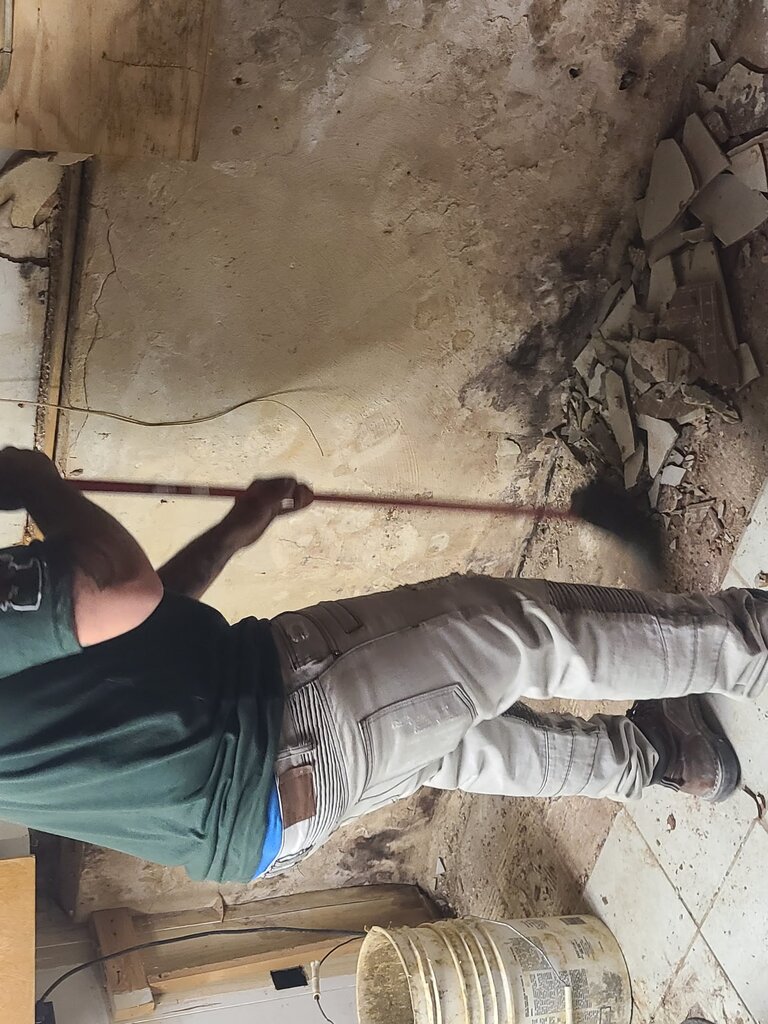
The photo at the top is from a basement near Elizabethtown. The walls are stone and the floor was tile over old concrete. The first step is what you see here: breaking up the floor along the wall so we can dig a channel for a drain.
That drain runs along the inside of the footing, collects the water before it reaches the floor and carries it to a sump basin, where a pump sends it outside. The floor gets patched with new concrete over the top. It is the most common fix we do in older Lancaster County basements, because it works with stone walls that were never built to keep water out.
Signs you need it: a damp line along the bottom of the wall, puddles that show up in the same spots every spring, or white mineral crust on the lower part of the wall.
Outside: Digging Down to the Wall
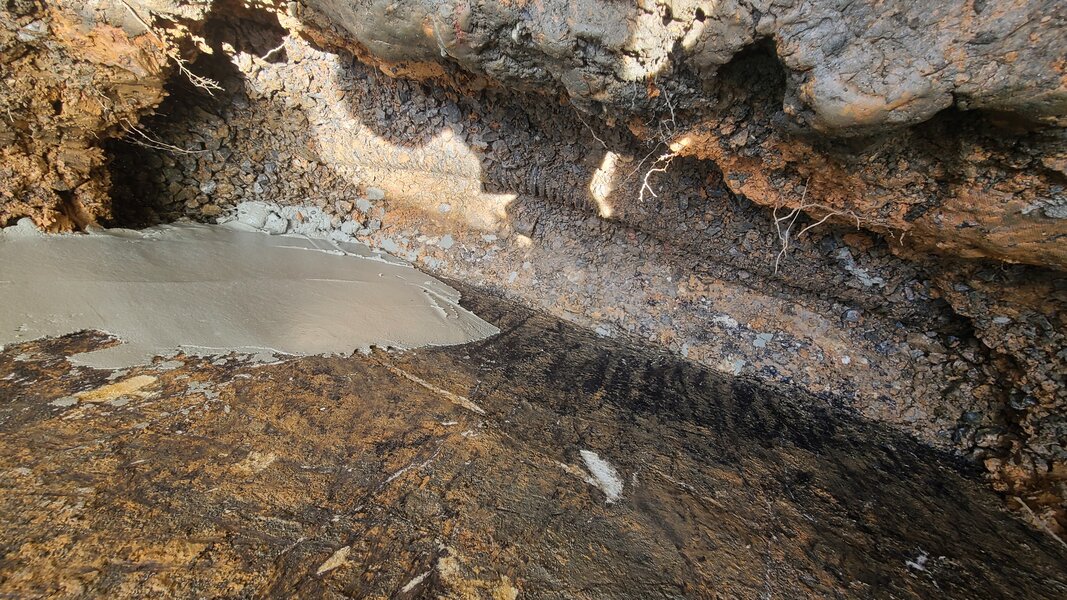
Sometimes the problem is one wall, not the whole basement. A crack, a bad section of block or a wall that the yard slopes toward can let in water at one spot. Then it can make sense to dig along the outside of that wall instead of opening the floor inside.
This photo is from a job a few miles from town. We dug down along the foundation, cleaned the wall and put new coating on it. When the trench is open we can also see what the soil is doing against the wall, which tells us whether a drain belongs at the bottom before it is backfilled.
Outside work costs more than inside work, because of the digging. It is worth it when the trouble is in one area, or when the inside of the basement is finished and you do not want it torn up.
In the Yard: Giving the Water Somewhere to Go
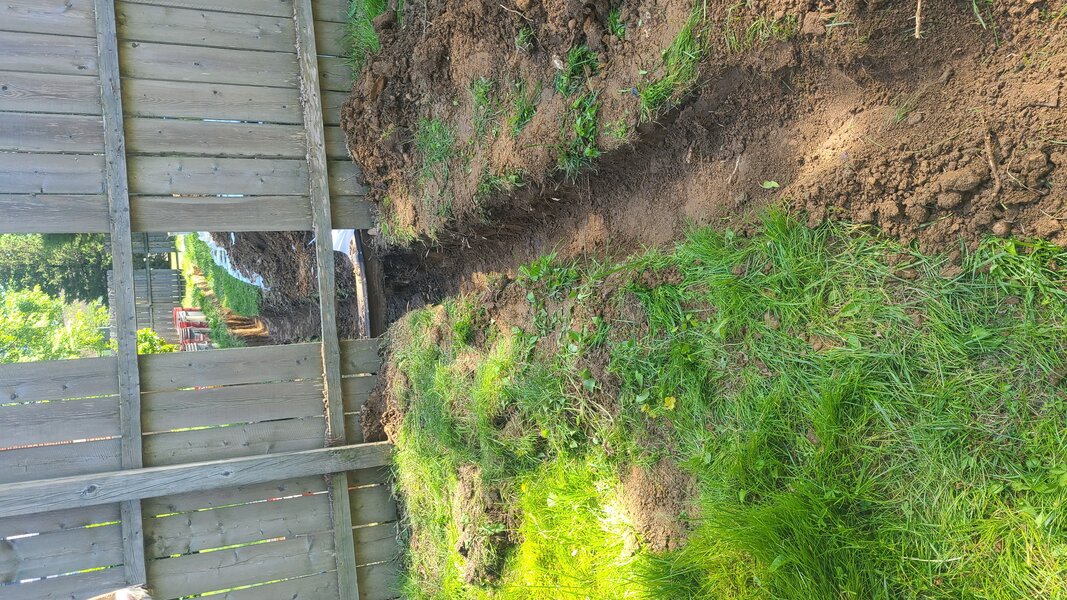
Water you pump out or carry off the roof still has to go somewhere. If a sump line or downspout dumps next to the house, a lot of it soaks right back down to the same wall. On a flat lot that happens even faster.
This trench is from a yard near Elizabethtown. It runs across the lawn and under the fence so the drain line can end far from the foundation, at a spot where the ground carries the water away. Once the pipe is in, the trench is filled and the grass grows back.
This is often the cheapest part of the job, and sometimes the only one a house needs. You can read more on our drainage solutions page.
Which One Does Your Basement Need?
Start with the simple things. During the next long rain, walk around the house and see where the downspouts and the sump line end. If they end near the wall, fix that first. Then watch where water shows up inside: along every wall at the floor line, at one crack, or in one corner.
Water along the whole floor line usually points to an interior drain. Water at one wall or one crack can sometimes be fixed from outside, or with a repair to that spot. Many houses need a mix, and we will tell you if a cheaper fix is enough.
You can see how we handle this in town on our basement waterproofing in Elizabethtown page, and our cost guide lists the typical price ranges. For more about the ground in the area, see our Elizabethtown page. We give a free inspection and a written estimate.
Frequently asked questions
Why does my Elizabethtown basement only get wet in the spring?
Elizabethtown sits in the Conoy Creek watershed, where the water table rises in late winter and spring and stays high for weeks. When it rises above the basement floor, water pushes in where the floor meets the wall, even if there has not been a big storm.
Can an old stone basement wall be waterproofed?
Yes. Stone walls were not built to keep water out, so the usual fix is to manage the water instead: a drain along the inside of the footing that carries it to a sump pump. The wall can also be repointed where the mortar has worn away.
Is interior or exterior waterproofing better?
It depends on where the water comes in. Water along every wall usually calls for an interior drain. Water at one wall or one crack can sometimes be fixed from outside. Exterior work costs more because of the digging, so we look at the basement first and recommend what fits.